
I’m nobody without somebody. Numerous people, including teens, assume something’s wrong with them if they aren’t dating. They believe their identity comes from being in a relationship with someone, anyone. They’re willing to date anyone just so they aren’t alone. Someone noticing them proves to others—and themselves—that they have worth. They’re more enamored with being in a relationship than having a healthy connection that starts with friendship. Instead of evaluating the pros and cons of being with a particular person, they’re caught up in the excitement of the relationship status.
Some teenagers move quickly once they find a boyfriend or girlfriend. Their hormones light up, and the rational portion of their brain disappears. Before you know it, they’re running through all the bases and getting entangled in each other’s lives. Unfortunately, some parents don’t understand how detrimental this can be to a teen’s emotional, mental, and physical health. Not to mention the relational fallout with friends, family, and future partners. Parents may even encourage a child to stick with the relationship, believing it’s better for them to be attached than unattached.
If a partnership moves too quickly, however, it’s more difficult to dissolve than if the couple had stepped lightly into the relationship and progressed at a slower pace. That’s what we want to help our children understand. Moving slowly and starting with friendship helps them determine compatibility. The end goal is a healthy, mature relationship moving forward, hopefully toward marriage. We don’t want our children to date just to date or hook up just to hook up. We hope they ultimately marry a person who is compassionate, loving, kind, and healthy. Which means they need to look for these characteristics at the beginning of the relationship.
Teaching teens to date with intention — not just to avoid being alone — starts with one thing: friendship. Here's how to help your teen build healthy relationship habits early. Friendship First: Why It Matters More Than Relationship… Share on XIn his book, Relationship Goals, Michael Todd says, “If he’s not mateable, he’s not dateable. That simply means, if you wouldn’t marry the person, don’t go out with him.” (p. 72) Todd recommends intentional dating, which starts with intentional friendship.
The Friend Zone Reframed
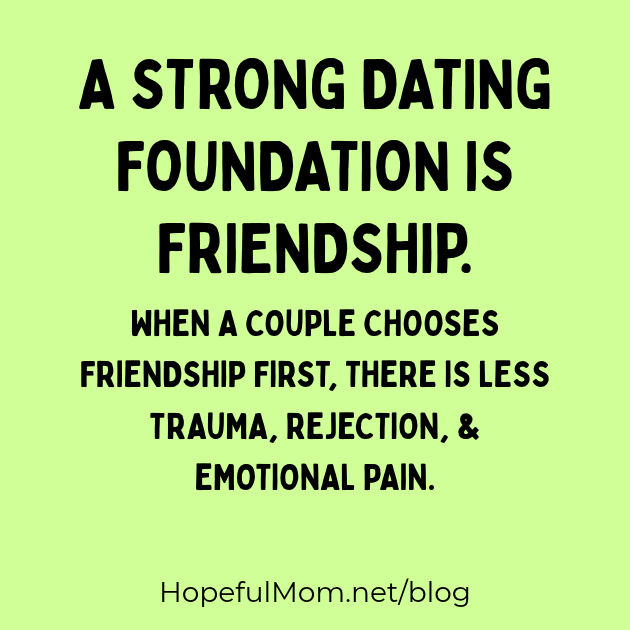
A strong foundation in any relationship is friendship. Todd suggests taking ninety days to get to know each other without pressure, possibly with a trusted married couple to guide you in the process. If at the end of ninety days, either person feels reluctant to continue, it’s easier to walk away. There is less chance of trauma, rejection, and emotional pain.
Let me pause here to address a question you may be asking. What if my child is 13+ years old and they aren’t ready for marriage? During this stage of life, they should discover themselves, figure out what type of person they’re interested in, and get to know different people while they wait until they’re old enough and mature enough to handle a dating relationship. This is the time for them to decide the characteristics and hobbies they’d like their eventual spouse to possess. This is also the time to focus on forming healthy friendships and discern what healthy versus unhealthy relationships look like.
Focused Conversations
During the initial phase of dating, Todd suggests having focused conversations. The objective is to ascertain if two people dating are ideal for each other—if they want to spend forever together.
According to Todd, focused conversations “help you get to know each other and start sensing if you’re right for each other.” (Relationship Goals, p. 77) Some things to look for during these conversations:
- Likes and dislikes
- Future goals
- Hobbies
- Relationships with parents, siblings, and extended family
- Character qualities like honesty, integrity, loyalty, caring, loving, authenticity, trustworthy, etc.
- How they make you feel
- For more “green flags” see the Mutuality chapter in Sexpectations: Helping the Next Generation Navigate Healthy Relationships.
Boundaries
While getting to know each other, set and communicate boundaries. For example:
- Set a curfew
- Set a physical touch boundary
- Set screen time limits
- Set area limits (i.e. no bedrooms)
In a healthy relationship, both parties respect and maintain the other person’s boundaries. If boundaries are pushed or broken, proceed with caution or break it off.
Let Friendship Lead
By laying a foundation of friendship, relationships have a better chance of fizzling quietly or flourishing.
Hopefully, our children aren’t in a hurry to date. We can remind them of their worth and the benefits of spending time with friends and pursuing goals now. There will be plenty of time in the future to think about dating and a potential spouse.
Have you subscribed to Hopeful Mom? If not, be sure to subscribe below for two FREE downloadable PDFs. Share Hopeful Mom with others, pick up a copy of Sexpectations, and send me your questions.