
Friendship First: Why It Matters More Than Relationship Status

I’m nobody without somebody. Numerous people, including teens, assume something’s wrong with them if they aren’t dating. They believe their identity comes from being in a relationship with someone, anyone. They’re willing to date anyone just so they aren’t alone. Someone noticing them proves to others—and themselves—that they have worth. They’re more enamored with being in a relationship than having a healthy connection that starts with friendship. Instead of evaluating the pros and cons of being with a particular person, they’re caught up in the excitement of the relationship status.

Some teenagers move quickly once they find a boyfriend or girlfriend. Their hormones light up, and the rational portion of their brain disappears. Before you know it, they’re running through all the bases and getting entangled in each other’s lives. Unfortunately, some parents don’t understand how detrimental this can be to a teen’s emotional, mental, and physical health. Not to mention the relational fallout with friends, family, and future partners. Parents may even encourage a child to stick with the relationship, believing it’s better for them to be attached than unattached.

If a partnership moves too quickly, however, it’s more difficult to dissolve than if the couple had stepped lightly into the relationship and progressed at a slower pace. That’s what we want to help our children understand. Moving slowly and starting with friendship helps them determine compatibility. The end goal is a healthy, mature relationship moving forward, hopefully toward marriage. We don’t want our children to date just to date or hook up just to hook up. We hope they ultimately marry a person who is compassionate, loving, kind, and healthy. Which means they need to look for these characteristics at the beginning of the relationship.

Teaching teens to date with intention — not just to avoid being alone — starts with one thing: friendship. Here's how to help your teen build healthy relationship habits early. Friendship First: Why It Matters More Than Relationship… Share on X

In his book, Relationship Goals, Michael Todd says, “If he’s not mateable, he’s not dateable. That simply means, if you wouldn’t marry the person, don’t go out with him.” (p. 72) Todd recommends intentional dating, which starts with intentional friendship.

The Friend Zone Reframed

A strong foundation in any relationship is friendship. Todd suggests taking ninety days to get to know each other without pressure, possibly with a trusted married couple to guide you in the process. If at the end of ninety days, either person feels reluctant to continue, it’s easier to walk away. There is less chance of trauma, rejection, and emotional pain.

Let me pause here to address a question you may be asking. What if my child is 13+ years old and they aren’t ready for marriage? During this stage of life, they should discover themselves, figure out what type of person they’re interested in, and get to know different people while they wait until they’re old enough and mature enough to handle a dating relationship. This is the time for them to decide the characteristics and hobbies they’d like their eventual spouse to possess. This is also the time to focus on forming healthy friendships and discern what healthy versus unhealthy relationships look like.
Focused Conversations

During the initial phase of dating, Todd suggests having focused conversations. The objective is to ascertain if two people dating are ideal for each other—if they want to spend forever together.

According to Todd, focused conversations “help you get to know each other and start sensing if you’re right for each other.” (Relationship Goals, p. 77) Some things to look for during these conversations:

Boundaries

While getting to know each other, set and communicate boundaries. For example:

  • Set a curfew
  • Set a physical touch boundary
  • Set screen time limits
  • Set area limits (i.e. no bedrooms)

In a healthy relationship, both parties respect and maintain the other person’s boundaries. If boundaries are pushed or broken, proceed with caution or break it off.

Let Friendship Lead

By laying a foundation of friendship, relationships have a better chance of fizzling quietly or flourishing.

Hopefully, our children aren’t in a hurry to date. We can remind them of their worth and the benefits of spending time with friends and pursuing goals now. There will be plenty of time in the future to think about dating and a potential spouse.

Have you subscribed to Hopeful Mom? If not, be sure to subscribe below for two FREE downloadable PDFs. Share Hopeful Mom with others, pick up a copy of Sexpectations, and send me your questions.
AI Can’t Solve Your Child’s Loneliness

Amber Garrett Carroll creates resources and trainings for parents. She understands one of the newest issues confronting our children, AI, and she’s here to help us understand its effects. I hope you find her message helpful. Be sure to check out her new book, Ready to Talk: A Christian Parent’s Guide to Gender and Sexuality.

Artificial intelligence has moved from novelty to near necessity with astonishing speed. Just a few years ago, predictions that AI would become part of everyday life seemed absurd to most of us. But today, students use AI tools to brainstorm essays, professionals rely on it to draft emails, and businesses increasingly build it into customer service phone trees. 

Continue reading “AI Can’t Solve Your Child’s Loneliness”

Celebrate Your Child’s Progress, Not Their Mistakes

celebrate your child's progress

My daughter, a senior in high school, stepped onto the javelin runway, determined to advance to nationals by finishing in the top six. This meet was the last I attended as a track mom.

I felt the pressure to be her coach, cheerleader, and advocate since her dad/coach couldn’t attend.

She had six attempts to throw as far as possible. Each time she stepped onto the runway and ran with her practiced run/crossover approach, I held my breath. The responsibility I felt mixed with the nostalgic emotions of watching my baby throw for the last time. The less-than-ideal field conditions added to my nervousness. In short, I was a mess.

Continue reading “Celebrate Your Child’s Progress, Not Their Mistakes”

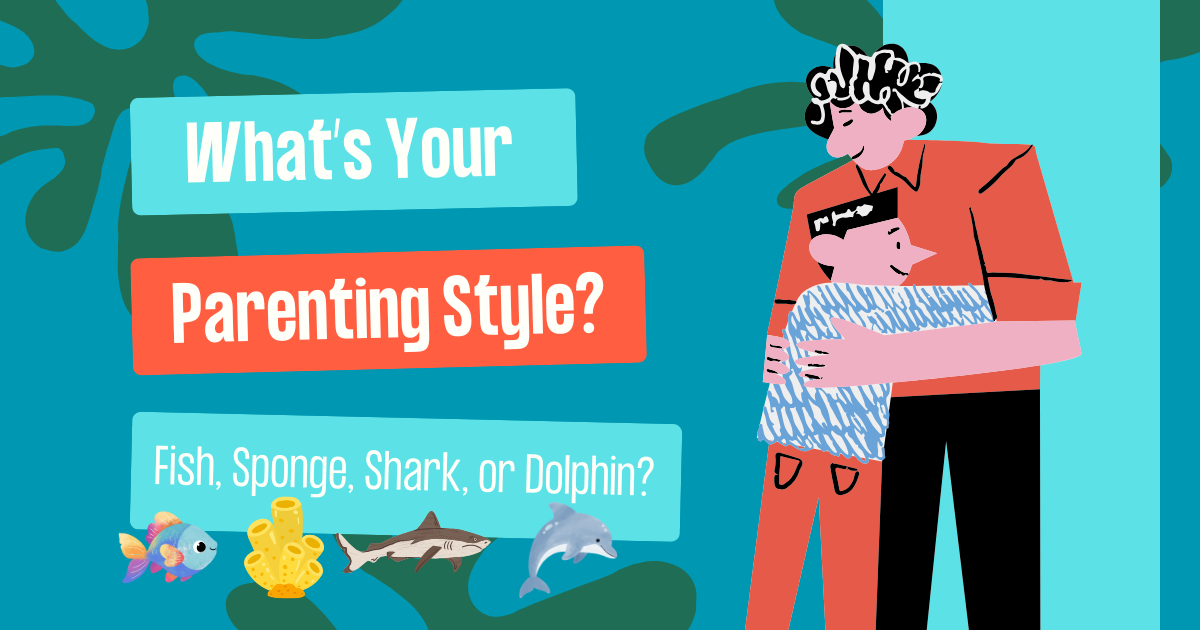
What’s Your Parenting Style? Fish, Sponge, Shark, or Dolphin?

parenting styles fish, sea sponge, tiger shark, dolphin

My child saw pornography. What should I do?

My child throws a fit when I ask him to turn his game off. What can I do?

My child keeps breaking our screen time rules. What steps can I take?

When parents ask these types of questions, they’re not typically pondering parenting styles. They desire a speedy solution. They want a formula—a statement or action—that will force their child to stop their current behavior immediately.

I understand. We should divert a child from destructive behavior as fast as possible. However, a quick fix is usually temporary. The pull of pornography, gaming, social media, vaping, fill-in-the-blank, will win unless we take a long-term approach. They’ll likely gravitate back to unwanted behavior unless we examine the heart of the problem.

Continue reading “What’s Your Parenting Style? Fish, Sponge, Shark, or Dolphin?”

Your Child Needs Safe Enough, Not Perfect

I met Dr. Carol several years ago and have admired her ever since. Her sweet spirit is magnetic, and her knowledge is extensive. In her presence, you feel seen and heard. I’m thrilled that she’s back at Hopeful Mom helping parents understand what a safe enough parent looks like.

Your child has gotten involved in pornography or something similar. You’ve worked hard to keep your nervous system from going berserk. You may wonder, “What did I do to let this happen?” Some aspects of how you related to your child either now or in the past may leave you feeling overwhelmed, embarrassed, or sad. Some people tend to give up at that point. Others try to shift blame to the child, or step up the boundaries or controls.

But what your child needs most of all is a safe enough presence. They don’t need you to be perfect; they need you to be with them, to see them, and to care.

Continue reading “Your Child Needs Safe Enough, Not Perfect”

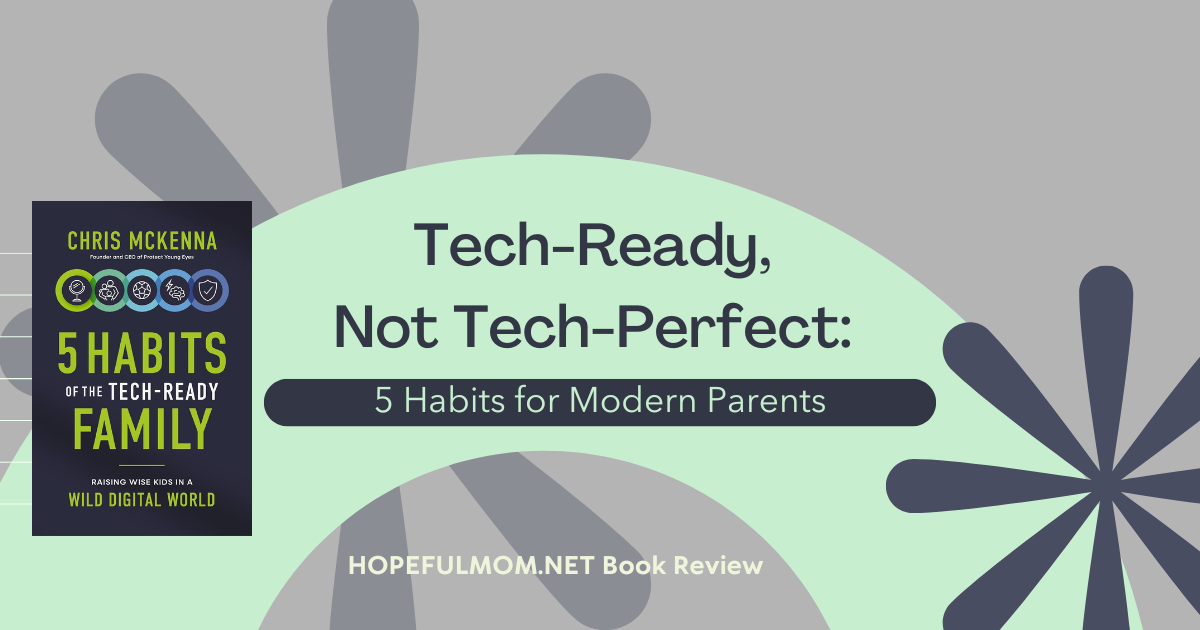
Tech-Ready, Not Tech-Perfect: 5 Habits for Modern Families

I’ve been a fan of the organization Protect Young Eyes and its founder, Chris McKenna, for years. So I was excited to read his new book, 5 Habits of the Tech-Ready Family: Raising Wise Kids in a Wild Digital World. Glad I did. He did an excellent job addressing the trials that parents face today, offering practical advice, and staying true to the core of parenting.

In the first chapter, McKenna admits parents wrestle with the challenging balance of technology being both a gift and a curse. “Yes, I want my son to take a phone … because the world has changed and there are no pay phones on street corners anymore. But I also need to discipline myself to check his location less and practice being okay with not always knowing. I need to let him be bored and independent sometimes, because those small discomforts are where resilience is born” (McKenna 5).

That’s the crux, right? We want our children to learn how to deal with boredom and become independent. Which means we need to let go and allow them space to grow and become resilient.

In his subsequent chapters, McKenna lists five habits of a tech-ready family.

Continue reading “Tech-Ready, Not Tech-Perfect: 5 Habits for Modern Families”

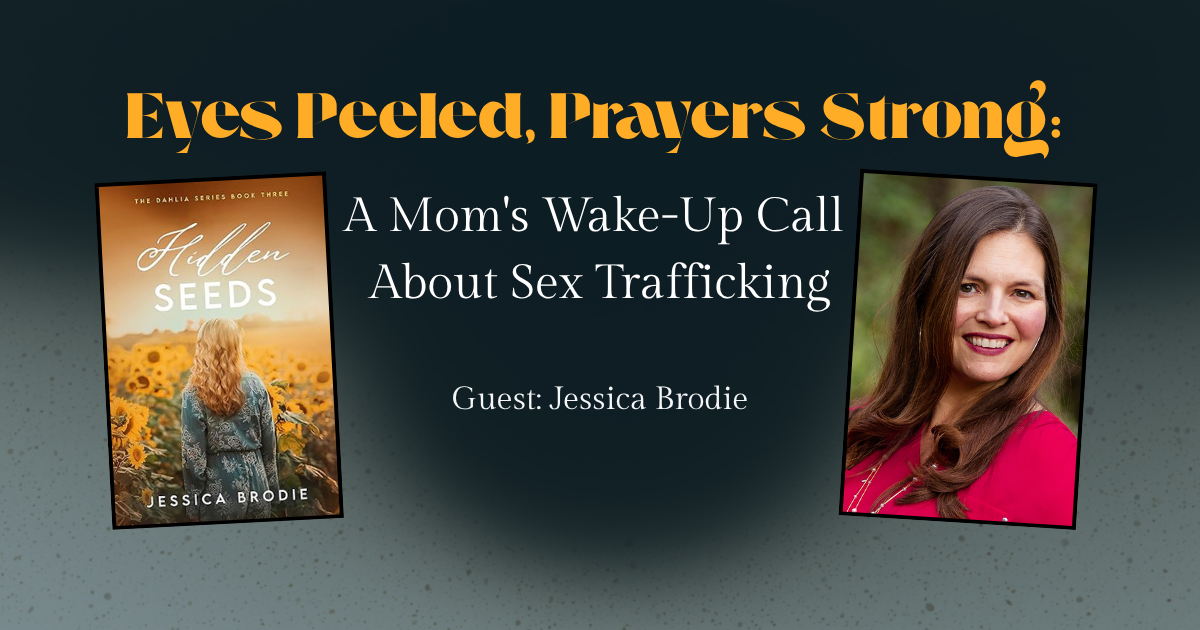
Eyes Peeled, Prayers Strong: A Mom’s Wake-Up Call About Sex Trafficking

I’m excited to welcome Jessica Brodie back to Hopeful Mom. Jessica’s passionate about educating parents on mental health issues and the sex trafficking trade. She’s done her homework and wrote about trafficking in her newest novel, Hidden Seeds. Keep reading for a sneak peek into the book as well as helpful information to keep our kids from getting caught in a potential trafficking situation.

I thought sex trafficking involved women—or men—being violently kidnapped and coerced, or lured into trafficking through addiction.

What I didn’t realize until far too recently was that trafficking usually starts subtly, and right here in our neighborhoods, with young kids who could live next door. Both girls and boys are brought in through a gradual process called “grooming” that preys on their emotional and sometimes physical needs.

Continue reading “Eyes Peeled, Prayers Strong: A Mom’s Wake-Up Call About Sex Trafficking”

What Grandparents Don’t Know About Online Safety Can Hurt Your Kids

what grandparents don't know about online safety

Sometimes we’re so focused on keeping our home safe for our kids, we forget they’re interacting with devices elsewhere – like at their grandparents’ (or other relatives’) house.

When my son was sixteen, he confessed to his father and me (for the second time) that he had a pornography problem. Through his prompting and with his approval, we added boundaries and safeguards.

New restrictions included locked down computers and no devices in bedrooms. Again, our son was fully on board with these regulations, as well as many others.

Continue reading “What Grandparents Don’t Know About Online Safety Can Hurt Your Kids”

The Crisis of Comparison

I’m thrilled to introduce Stephanie Catmull. She’s a therapist and mom, so she understands the challenges of parenting preteens and teens in this technological age. Additionally, Stephanie is caring and personable. It’s a privilege to call her friend. She’s here to help us understand the crisis of comparison our children face every day. I’m sure you will find some helpful information in her message.

“Hey, Mom. How come we never go on vacation during Spring Break like all my friends?”

“Hey, Dad. Look at the car my best friend got for his birthday!”

“She’s so much prettier than me. I wish I had her hair and her clothes and her body.”

“No one ever likes my posts. Just goes to show how unpopular I am.”

“Everyone but me has a life.”

Crisis of comparison leads to unhealthy depression and anxiety in our teens, and us, when we believe we’re “less than” everyone else. Teens, especially, are vulnerable because they’re at a crucial—and normal—stage of development where they’re trying to figure out their sense of self. During this time, parents’ influence fades, and peers’ effects magnify. They observe each other’s popularity, looks, beliefs, friends, values, athletics, academics, and activities to see who they want to be, and how to get there.

Continue reading “The Crisis of Comparison”

The Importance of Real-Life Community in a Social Media World

community

A great tragedy of our day is that many of us want to be loved, but we’re terrified of being known. ~ The Wolf in Their Pockets

Community matters. People we interact with—friends, neighbors, classmates, co-workers, random people on the street—influence us. Surroundings impact beliefs, thoughts, and opinions, as well as physical and mental health. All these factors contribute to behavior.

In short, adults and teens alike should choose friends wisely and engage with others who support healthy choices frequently.

Where do we find these friends?

Continue reading “The Importance of Real-Life Community in a Social Media World”