

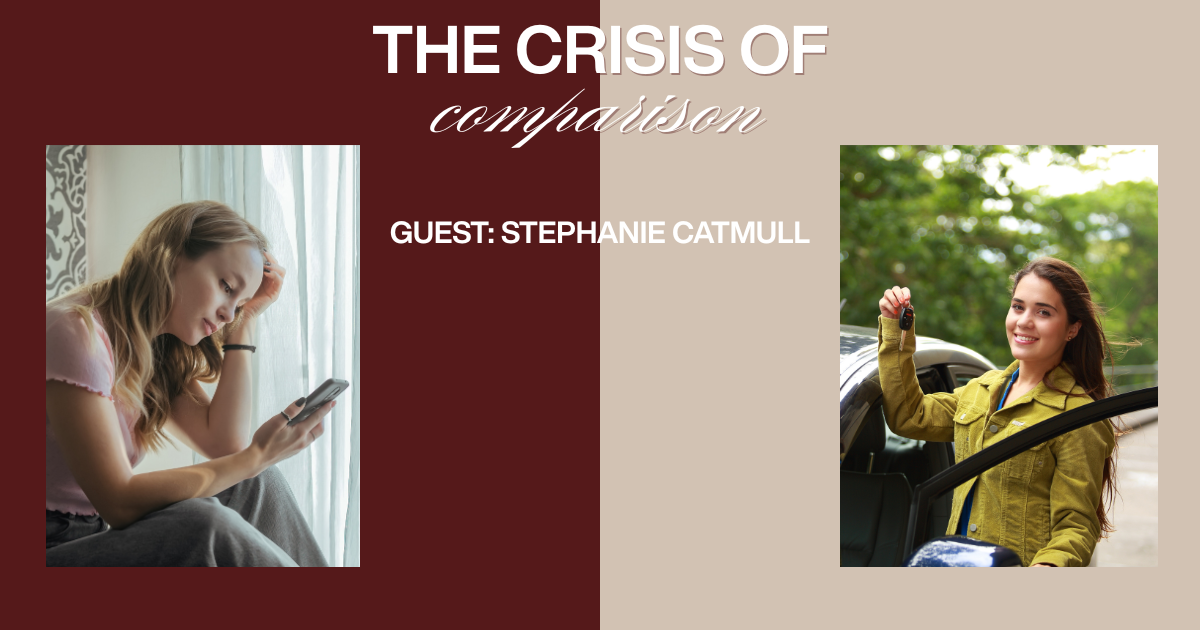
I’m thrilled to introduce Stephanie Catmull. She’s a therapist and mom, so she understands the challenges of parenting preteens and teens in this technological age. Additionally, Stephanie is caring and personable. It’s a privilege to call her friend. She’s here to help us understand the crisis of comparison our children face every day. I’m sure you will find some helpful information in her message.
“Hey, Mom. How come we never go on vacation during Spring Break like all my friends?”
“Hey, Dad. Look at the car my best friend got for his birthday!”
“She’s so much prettier than me. I wish I had her hair and her clothes and her body.”
“No one ever likes my posts. Just goes to show how unpopular I am.”
“Everyone but me has a life.”
Crisis of comparison leads to unhealthy depression and anxiety in our teens, and us, when we believe we’re “less than” everyone else. Teens, especially, are vulnerable because they’re at a crucial—and normal—stage of development where they’re trying to figure out their sense of self. During this time, parents’ influence fades, and peers’ effects magnify. They observe each other’s popularity, looks, beliefs, friends, values, athletics, academics, and activities to see who they want to be, and how to get there.
Repercussions of Social Media
The yardstick teens use to determine their own identity, confidence, and self-worth has increasingly become social media. Apps such as Instagram, Snapchat, and TikTok are three of the many offenders infecting our children’s opinions about themselves due to fake and conflated personas that others post. Teens feel like they don’t measure up, everyone seems to be enjoying a good life except for them, and they can’t show who they really are for fear of judgment and criticism.
This award-winning video, “A Social Life” by Kerith Lemon Pictures, effectively shows how unhealthy comparisons lead to high depression, isolation, and low self-esteem:
In the video, the career-driven woman was not living the life she portrayed but wanted everyone to think she was. She deleted a post if she didn’t get enough “likes,” assuming no one liked her. Contrary to the image she posted, she was isolated, alone, and depressed.
Imagine your teen comparing him/herself to false snapshots, thinking they aren’t athletic, or popular, or have it all together. They have no idea what most people post represents a very small fraction of the “good” times. Think about it. People don’t post about their depression. Most teens don’t post about family struggles, bullying, acne, their awkwardness, or breakups. They don’t want people to see their real life, and they don’t understand that their friends only post what they want others to perceive about them.
Teens compare themselves to false snapshots of peers, not realizing that others don't post about struggles, acne, or breakups. So they don't believe they measure up. Stephanie Catmull tells parents how to help their teens. The Crisis… Share on XWhat our teens are doing, though, is spending hours upon endless hours consuming media which is damaging their mental health. By staring at a screen, they’re compromising the growth of necessary white and gray matter in their brains. They’re also refraining from social activities which prevent the likely descent into doom and gloom. Their self-worth is based on how many followers they have. Because of that, they imitate these mega-popular, air-brushed, staged “influencers” who portray how they should be living their lives.
Jonathan Haidt, in his instrumental book The Anxious Generation regarding the “great rewiring” of our kids’ brains, recommends children under sixteen years of age should not have access to social media due to the high risk of harm to their development and mental health. Anyone over sixteen, including parents, should limit social media to no more than two hours per day. Children under twelve shouldn’t have a phone. It’s like willingly giving them poison and hoping they don’t get sick.
Other Contributors to the Crisis of Comparison
Social media, though, is not the only culprit to comparison. Your children may also view peers as better than themselves. Just as your teen frequently puts on a mask in school for their classmates and teachers, they forget others do, too.
- The popular cheerleader they envy is also the girl who hides that her parents are going through a messy divorce and is fighting an eating disorder.
- The good-looking baseball pitcher who makes everyone laugh is also the boy who conceals his father is physically abusive every time they lose a game.
- The smart, straight “A” kid whose grades appear effortless is also the person whose parents are addicts, and this is the only way they can fly under the radar and not create waves at home.
What to Do
Healthy comparison can create motivation to work harder for an elusive goal. Competition can lead to more effort, striving for better outcomes, and becoming better versions of themselves. Unhealthy comparison, however, has the opposite effect and can spawn a mental-health crisis. As a parent, what actions can you take?
- Model the behavior you want emulated. That means limiting your social media and time on your phone. Your children watch you like a hawk to see if you’re practicing what you preach. They are quick to point out the hypocrisy of “do as I say, not as I do.”
- Address unhealthy dynamics. Signs may include: your child spends more time alone, they no longer engage in activities they used to enjoy, they exhibit signs of low self-esteem and self-worth, and they think their phone is the only means of connection.
- Decide which apps they can have, how much time they can spend on devices, and when they get a phone. You have control. They may be angry. They may accuse you of being unfair. Better that, though, than dealing with depression and suicidal ideation.
- Spend quality time with them away from screens. Have those hard conversations about how they feel and why they feel this way. Help them understand they only see a fraction of a person’s actual reality.
- Validate their feelings first; fix the problem later. Many parents jump to a solution before finding out the cause. Then, the “fix” misses the mark and their teen feels unheard. Listen well with compassion, love, and empathy.
- Don’t be afraid to be their parent. You have a responsibility to keep them from harm if you know that giving them something may damage their mental health.
You Got This
It is possible to walk your child through the crossroads of healthy vs. unhealthy comparison so your adolescent successfully navigates the fast-moving current of their teenage years. Just remember how those years were a challenge for you. Be fully present. Intentionally talk with them. Do for them what you wanted your parents to do for you, and turn the crisis of comparison into a flourish.
Subscribe to Hopeful Mom for two FREE PDF downloads and blog post updates. Check out the About page and all the resources available.
About the author

Stephanie Catmull
Stephanie is a Christian therapist in Colorado Springs, CO. Her lifelong mission is to partner with God in order to help people heal from their trauma and other difficult challenges they are facing. Because she has been a high school teacher and a mother of 5 children, she understands the challenges of mentoring teens in the age of technology. She currently writes for Women in Scripture (www.womeninscripture.com) with a focus on exploring all the women of the Bible and their significance in history as well as in today's world.