
The Crisis of Comparison

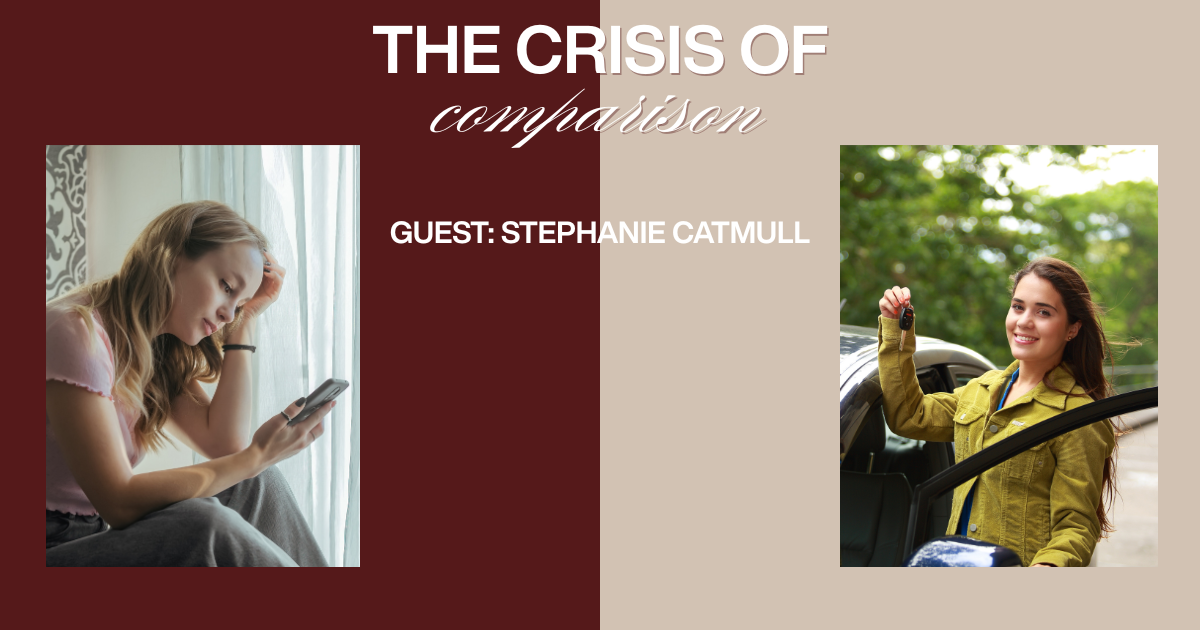
I’m thrilled to introduce Stephanie Catmull. She’s a therapist and mom, so she understands the challenges of parenting preteens and teens in this technological age. Additionally, Stephanie is caring and personable. It’s a privilege to call her friend. She’s here to help us understand the crisis of comparison our children face every day. I’m sure you will find some helpful information in her message.

“Hey, Mom. How come we never go on vacation during Spring Break like all my friends?”

“Hey, Dad. Look at the car my best friend got for his birthday!”

“She’s so much prettier than me. I wish I had her hair and her clothes and her body.”

“No one ever likes my posts. Just goes to show how unpopular I am.”

“Everyone but me has a life.”

Crisis of comparison leads to unhealthy depression and anxiety in our teens, and us, when we believe we’re “less than” everyone else. Teens, especially, are vulnerable because they’re at a crucial—and normal—stage of development where they’re trying to figure out their sense of self. During this time, parents’ influence fades, and peers’ effects magnify. They observe each other’s popularity, looks, beliefs, friends, values, athletics, academics, and activities to see who they want to be, and how to get there.

Continue reading “The Crisis of Comparison”
The Importance of Real-Life Community in a Social Media World

community

A great tragedy of our day is that many of us want to be loved, but we’re terrified of being known. ~ The Wolf in Their Pockets

Community matters. People we interact with—friends, neighbors, classmates, co-workers, random people on the street—influence us. Surroundings impact beliefs, thoughts, and opinions, as well as physical and mental health. All these factors contribute to behavior.

In short, adults and teens alike should choose friends wisely and engage with others who support healthy choices frequently.

Where do we find these friends?

Continue reading “The Importance of Real-Life Community in a Social Media World”

Snapchat and Other Social Demons

snapchat and social media have pornographic material

It’s my honor to introduce Daniel Weiss, president of Sexual Integrity Leaders, Inc. and co-author of Treading Boldly through a Pornographic World (which I highly recommend). Daniel’s passion for equipping leaders to help the sexually broken is evident. I’ve had the pleasure of speaking at one of the Sexual Integrity Leadership Summits he sponsors yearly. He is encouraging and humble. I’m sure you will find helpful nuggets of wisdom, especially on helping your children deal with this pornographic world, in his post.

A recent study from the United Kingdom again confirms what we have known for the past twenty years: exposure to online pornography is normal for kids today. In her report supporting the strengthening of Britain’s online protection laws, Children’s Commissioner Dame Rachel de Souza shared that, “This report … paints a stark picture of what childhood looks like in 2025 with an online world that is, in many ways, completely unfit for children.”

Social Media: Top Pornographic Sites

We might suspect the internet is bad for kids (or know it full well), but this recent study reveals that eight of the top sources for pornography aren’t pornographic sites at all, but mainstream social media sites like, X, Snapchat, Facebook, Instagram, Tik Tok and YouTube. The internet has definitely moved on from the marketplace of ideas to a virtual brothel actively inviting kids to step inside.

Continue reading “Snapchat and Other Social Demons”

How Predators Groom Kids for Sex Trafficking Online

Sex trafficking doesn’t typically start with kidnapping. It starts with grooming. Predators build trust first. They use affection, attention, and manipulation to slowly convince preteens and teens that abuse is love, secrecy is normal, and speaking up will ruin lives.

Grooming for sex trafficking happens in person and online and is particularly prevalent on social media platforms. Pornography and sex trafficking are intertwined, so we must discuss signs and grooming techniques with our children.

I recently watched a reel on journalist Lori Fullbright’s Instagram that clearly explains how predators groom their victims. You can watch the reel here. The following transcript reveals phrases predators use to manipulate, isolate, and control children before trafficking begins.

Continue reading “How Predators Groom Kids for Sex Trafficking Online”

Quitting Social Media Transformed My Daughter’s Mental Health

It’s a privilege to welcome back Jessica Brodie as our guest author. She cares for those struggling with mental health. I love her thoughts and advice concerning teens, social media, and mental health. Jessica’s debut book released last month. Find it here.

It started slowly at first, sneaking up on me. My confident, boss-lady daughter struggled with anxiety and panic attacks for years, but she was still self-assured and likable, and she still seemed to like herself.

Then puberty hit, and with it, the pandemic. About that same time, she’d reached the age where it seemed OK to let her have a cell phone—carefully moderated, of course, with all the requisite parental controls, privacy restrictions, and other important instructions, like “no direct messaging” and “don’t give out your personal info.” I didn’t think it was a problem to let her get TikTok and Instagram as long as her accounts were private.

Continue reading “Quitting Social Media Transformed My Daughter’s Mental Health”

What Netflix Show Adolescence Reveals About Teen Mental Health and Technology

Netflix Adolescence

Information about the Netflix series Adolescence filled my feed, but I resisted the urge to turn it on. I ignored the ads and scrolled past the comments. I didn’t want to watch.

My research can affect my mental health to the point that I must step away. When that happens, I view uplifting, positive, or humorous content. I press pause on social media and all things mentally exhausting or downright sad.

But after seeing post after post about the new record-breaking Netflix series Adolescence, I relented. Accounts I trust claimed the show was impactful and that the storyline mirrors what our teens face every day.

Continue reading “What Netflix Show Adolescence Reveals About Teen Mental Health and Technology”

Opening My Eyes to the Realities of Sex Trafficking

January is Human Trafficking Awareness month. I met Jessica Brodie last fall and learned of her passion to educate others about the sex trafficking issue plaguing our society. Jessica offers insight and wisdom to us in her post.

Like many people, I used to make a lot of assumptions about sex trafficking—I assumed it only happened in “those” neighborhoods or to “those” kinds of kids—girls who didn’t know better, or whose moms were in the sex industry. I assumed the girls knew what they were getting into and simply made a choice—a bad one, but one they made with eyes wide open.

Continue reading “Opening My Eyes to the Realities of Sex Trafficking”

What Parents Need to Know About Sextortion

Sextortion. One of several threats to our children. Parents, we should be aware of the danger and talk with our children.

What is sextortion?

Sextortion is “extortion in which a perpetrator threatens to expose sexually compromising information (such as sexually explicit private images or videos of the victim) unless the victim meets certain demands.”[i] They may demand additional sexual content, sexual activity, or money. Victims often know their extorters. A current or former boyfriend or girlfriend may have an image the victim sent to them confidentially believing their interaction was personal and private. Then the offender uses the content against them.

Continue reading “What Parents Need to Know About Sextortion”

Social Media Safety

Most of us use social media daily. Whether we’re messaging a friend in WhatsApp, looking up how to fix something on YouTube, or scrolling our Instagram feed, we’re enjoying the benefits of social media. But, is it safe? Parents ask me whether they should allow their preteens and teens to get SnapChat, TikTok, or the latest greatest social media app. In this guest post, John DiGirolamo gives us some pointers on social media safety for our children. The following is an adapted excerpt from John’s booklet, It’s Not About the Predator: A Parent’s Guide to Internet & Social Media Safety.

Is social media safe? The short answer is no. Social media (and the rest of the internet) isn’t safe. So, if you are going to allow your kid access, be aware of the dangers and pitfalls.

Continue reading “Social Media Safety”

Peer Pressure and Finding Your People

“But all my friends are doing it. . . You don’t understand what today’s culture is like. . . . My friends will be mad if I don’t participate.”

A force parents combat is peer pressure. “Peer pressure is real, and perception is reality. . . The pressure students experience in middle school, high school, and college is colossal and burdensome. They endure ridicule and face being an outcast if they dress incorrectly, don’t respond to texts in a timely manner, or use an improper filter on their social media photos.” (Sexpectations: Helping the Next Generation Navigate Healthy Relationships, p. 40)

Continue reading “Peer Pressure and Finding Your People”