

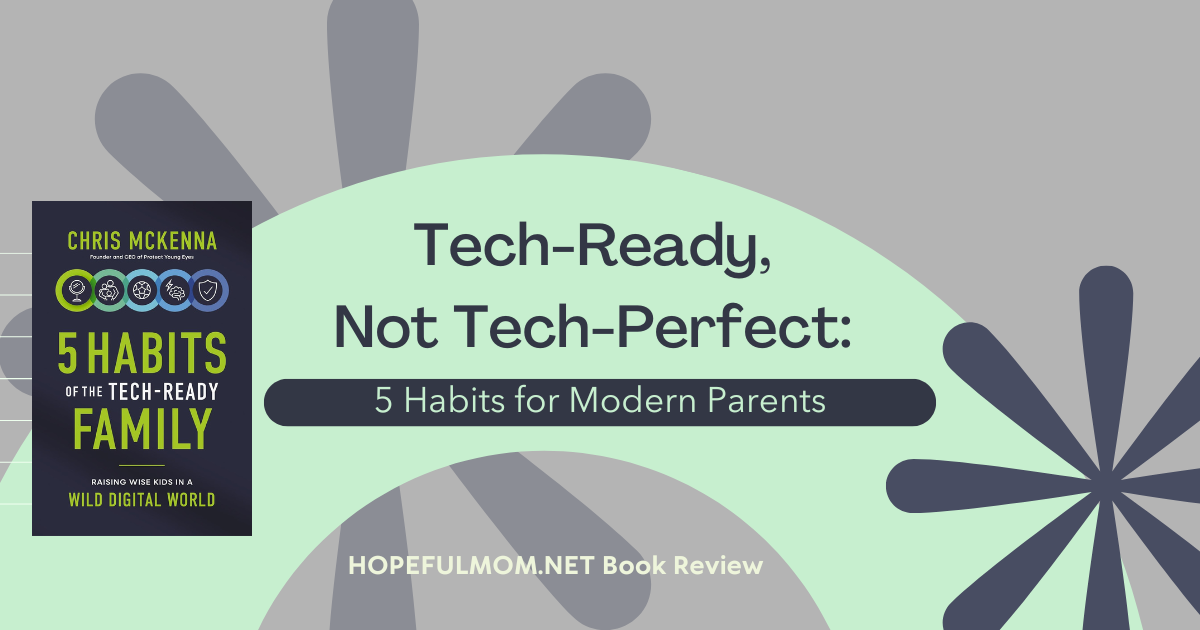
I’ve been a fan of the organization Protect Young Eyes and its founder, Chris McKenna, for years. So I was excited to read his new book, 5 Habits of the Tech-Ready Family: Raising Wise Kids in a Wild Digital World. Glad I did. He did an excellent job addressing the trials that parents face today, offering practical advice, and staying true to the core of parenting.
In the first chapter, McKenna admits parents wrestle with the challenging balance of technology being both a gift and a curse. “Yes, I want my son to take a phone … because the world has changed and there are no pay phones on street corners anymore. But I also need to discipline myself to check his location less and practice being okay with not always knowing. I need to let him be bored and independent sometimes, because those small discomforts are where resilience is born” (McKenna 5).
That’s the crux, right? We want our children to learn how to deal with boredom and become independent. Which means we need to let go and allow them space to grow and become resilient.
In his subsequent chapters, McKenna lists five habits of a tech-ready family.
Habit 1: Model the Right Behaviors
Most of us know our children learn from what we do, not from what we say. But understanding the nitty-gritty, the practical practices, may elude us. Establishing family values, as McKenna suggests, helps parents be intentional with their technology. Discuss your values with your children and design a media tech plan based on those beliefs.
Model positive tech behaviors. Examples include:
- choosing not to be on your phone at appointments or while exercising
- not checking your phone at stoplights
- leaving your phone at home during quick errands
By modeling these behaviors our children learn how to be okay doing nothing. McKenna explains, “Neuroscientist Alicia Walf says it’s critical for brain health to let yourself be bored from time to time. Your brain gets a much-needed rest when you’re not working it too hard. In those moments that might seem empty and needless, strategies and solutions that have been there all along in their embryonic forms are given space and come to life” (McKenna 33).
Habit 2: Pursue Authentic Connection
If we want our children to trust us, we must be authentic with them. To that end, McKenna reminds us not to freak out when we talk with our children and to practice curiosity by asking questions pertaining to their decisions. Additionally, be vulnerable by telling your children what you are afraid of, use tech together side by side, and actually practice behaviors you want them to exhibit when they encounter tricky people or pornography.
Does your family feel more "tech-survival" than tech-ready? In this post, we look at 5 Habits Chris McKenna believes will help your family be tech-ready. Tech-Ready, Not Tech-Perfect: 5 Habits for Modern Families #parenting… Share on XHabit 3: Encourage Work and Play
The author believes work and play are “about building a life outside those devices that’s more attractive, rewarding, and real than anything the digital world could offer” (McKenna 72). A child’s brain learns best through movement.
Encouraging work and play teaches kids perseverance and the beauty of delayed gratification. Of course, that means we must get out of the way and allow them the freedom to accomplish chores we could complete better and finish faster on our own.
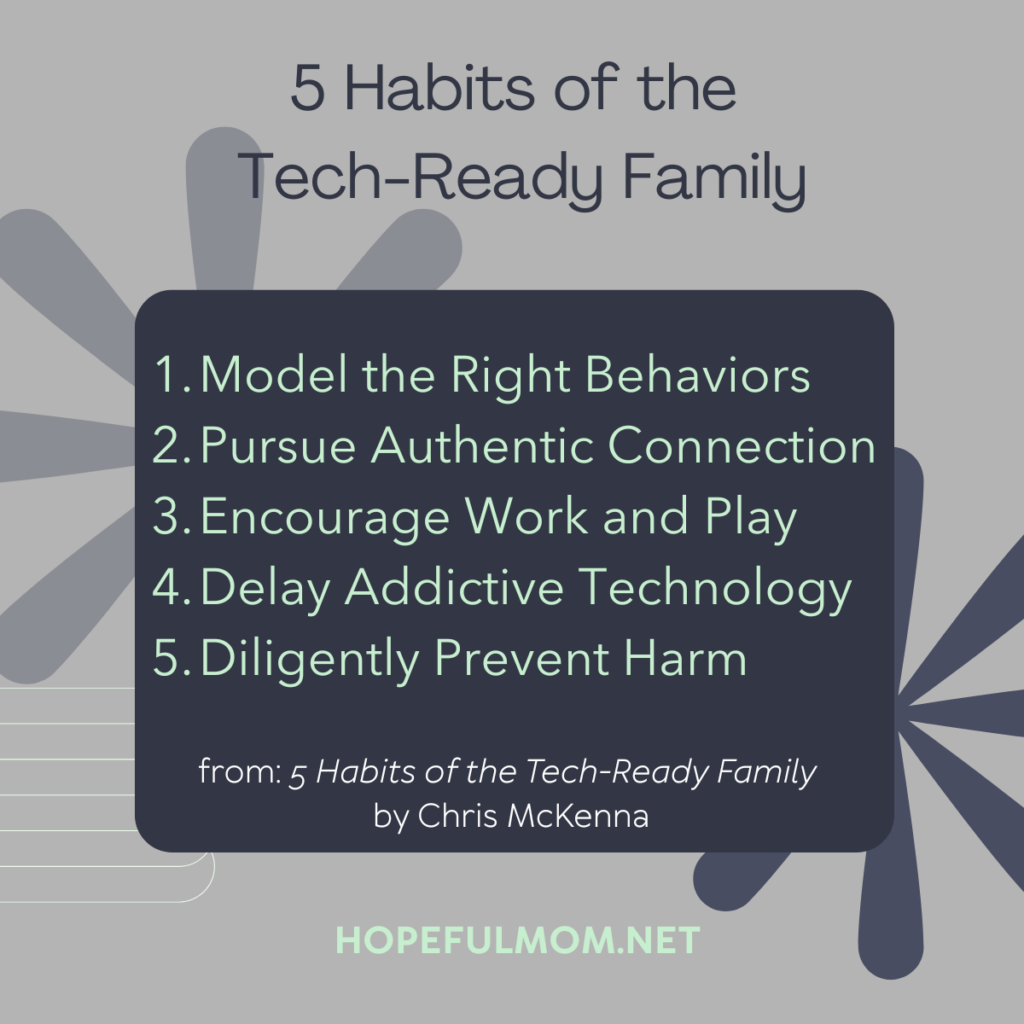
Habit 4: Delay Addictive Technology
Because certain technology is addictive and information it feeds can be confusing, McKenna suggests delaying tech as long as possible. Tech-ready families don’t want to provide children with “content ahead of schedule,” which is content too advanced for their understanding. “For instance, if a young child is exposed to pornography around age ten, ahead of puberty and maybe ahead of sexual education, he’s now seeing graphic images and thematic content about what grown-ups do but has no way to understand it” (McKenna 102). McKenna says this is true of adult themes, violence, shocking world events, and adult responsibilities.
Habit 5: Diligently Prevent Harm
AI, deepfakes, and sextortion are new terms and new concerns brought about because of advanced technology. Our children face these issues regularly. Our job is to safeguard them.
“Preventing harm means wrapping our kids in multiple layers of protection” (McKenna 121). To keep your children from harm, start with prayer, then work on relationships, add filters to routers and devices, keep devices in public spaces, and test each app before allowing a child to download it (McKenna 119-154). In addition to reading McKenna’s new book, 5 Habits of the Tech-Ready Family, I suggest accessing Protect Young Eyes’ website for information about specific apps or devices.
Keeping our children safe is an ongoing process that can be tiresome. However, the rewards outweigh the aggravation. Go slowly. Take each step one at a time. Do your research. Understand the reasoning behind each layer and offer yourself grace while learning. You’ll be grateful you walked through the process.
For more information on healthy relationships in a digital world, read Sexpectations: Helping the Next Generation Navigate Healthy Relationships. Subscribe to Hopeful Mom for two FREE PDF downloads and blog post updates. Check out the About page and all the resources available.
About the author

Barb Winters is the author of Sexpectations: Helping the Next Generation Navigate Healthy Relationships and founder of Hopeful Mom. She’s a certified mental health coach and offers one-on-one consultations for parents. For more about Barb, click "About" in the menu.