A New Book to Protect Girls in a Porn-Saturated World: How to Safeguard Their Self-Worth and Emotional Well-Being

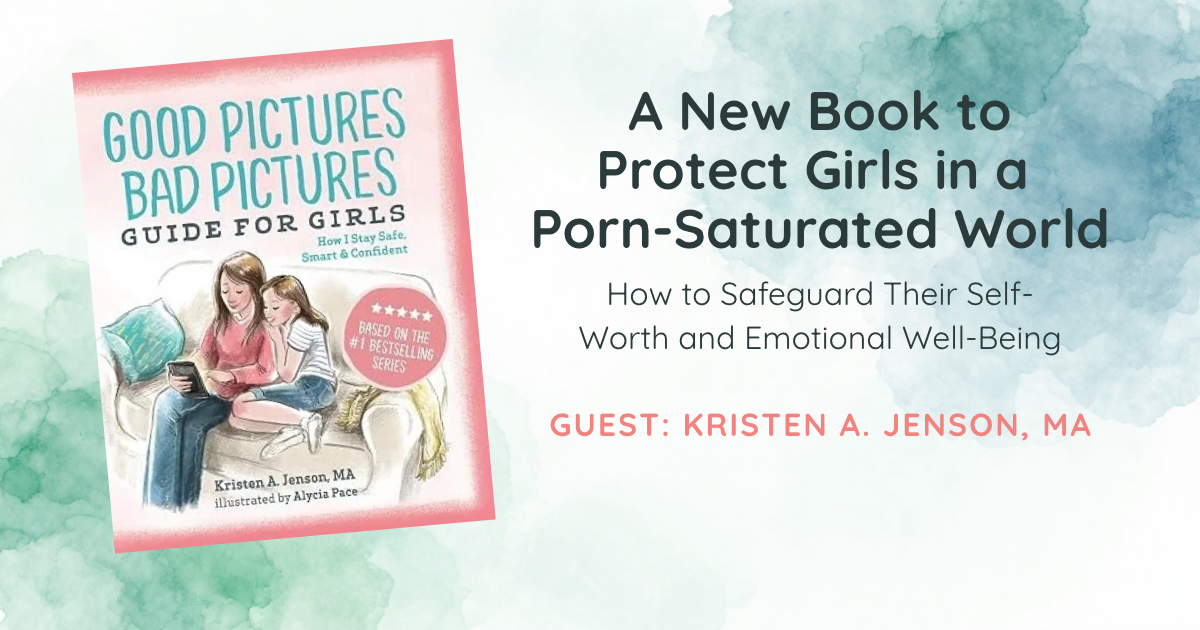
photo of book about girls and porn Kristen Jenson

It is my distinct pleasure and privilege to introduce Kristen Jenson, Founder of Defend Young Minds. She’s the #1 bestselling author of Good Pictures Bad Pictures and Good Pictures Bad Pictures, Jr., with nearly 400,000 copies sold worldwide. I know Kristen personally and admire her work and desire to help parents teach their children about the harms of pornography. Kristen recently released a new book to help parents and girls understand the dangers of porn, and she graciously agreed to tell us about here.

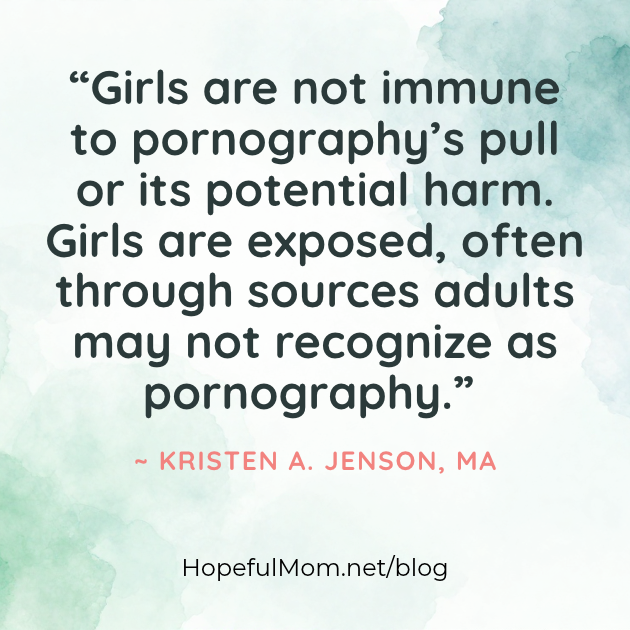
Girls are not immune to pornography’s pull or its potential harm.

For years, pornography has been treated primarily as a boys’ issue. But over the past decade, I’ve heard women of many ages and backgrounds share their experiences with pornography exposure, addiction, and trauma.

Parents of daughters also repeatedly told me that girls needed a resource of their own—one that could reduce shame and help families have protective conversations.

That’s why I wrote Good Pictures Bad Pictures Guide for Girls: How I Stay Safe, Smart & Confident—to help girls recognize toxic messages, establish healthy boundaries, and build lasting self-esteem.

It took two years to write, test, and publish my Guide for Girls. The result is a beautifully illustrated read-aloud book for girls ages 7 to 12. It models warm parent-daughter conversations and includes “Let’s Talk” prompts that families can use to continue discussions. Because it does not explicitly discuss sex, it can be introduced before traditional “birds and bees” conversations, helping establish awareness, safety, and trust early.

Girls are not less vulnerable

Many parents assume girls are less vulnerable to pornography than boys. But girls are being exposed, often through sources adults may not recognize as pornography.

Sexualized content can reach girls through:

  • Social media
  • Video platforms
  • Music apps
  • Podcasts
  • Group texts and peer sharing
  • Stories, romance content, and fan fiction

Pornography is no longer confined to obvious websites. It can arrive through almost any internet-connected screen, often disguised as entertainment or content girls already enjoy.

Beneath that packaging, however, sexualized media can communicate harmful ideas about bodies, relationships, objectification, and self-worth.
quote from Kristen Jenson about girls and porn

Why parents put off the conversation with girls about porn

Most parents want to protect their daughters, but talking about pornography can feel uncomfortable. Parents may assume it is primarily a boys’ problem, worry about taking away their child’s innocence, feel unprepared, or simply keep postponing the conversation.

I understand that hesitation. But waiting does not protect girls. Preparation does.

Girls need to understand that pornography isn’t limited to explicit images. Sexualized messages can appear in stories, lyrics, and other media. Our daughters  need language for recognizing objectification and understanding how media messages can influence the way they see themselves and others.

This new book helps girls:

  • Reject objectification
  • Understand the risks of pornography and addiction
  • Develop a healthy self-image
  • Respect and protect their bodies
  • Make thoughtful media choices
  • Talk openly with parents and trusted adults
  • Build confidence and healthy boundaries

The approach is protective without being alarmist, direct without being harsh, and honest without creating shame.

What girls will learn

The book provides an age-appropriate definition of pornography and explains why it can be harmful. It introduces basic brain science, including the roles of the thinking brain, feeling brain, and dopamine.

Girls also learn to respect their own bodies and the bodies of others, understand why they should never share pictures of private body parts, and make media choices based on healthy values.

Girls need more than a warning to “stay away from porn.” They need facts, vocabulary, confidence, and a plan.

Girls are not immune to pornography’s pull or its potential harm. What can parents do? Kristen Jenson answers that question here. A New Book to Protect Girls in a Porn-Saturated World: How to Safeguard Their Self-Worth and Emotional… Share on X

Why a girl-focused guide matters

Girls are growing up in a culture that can encourage them to measure their worth by appearance, attention, popularity, or attractiveness. Pornography can intensify those messages by encouraging objectification, of others and of themselves.

That’s why the book addresses body image, friendships, belonging, emotional and social pressure, romance-driven media, and cultural messages that can undermine self-worth.

Girls need to know that their value is intrinsic. It doesn’t come from being attractive, desired, or approved of. Their worth comes from who they are—their character, values, abilities, relationships, and unique gifts.

A tool for families

Although the book speaks directly to girls, it’s also a resource for the adults who care about them.

Parents, grandparents, counselors, teachers, leaders, and caregivers can use it to begin conversations they may otherwise struggle to start. The book provides an age-appropriate framework that can turn an uncomfortable subject into an opportunity for trust and connection.

What I hope girls take away

More than anything, I hope girls gain four lasting advantages:

  1. An open, trusting relationship with a parent or caring adult
  2. An understanding of how harmful objectification can be
  3. A practical plan for protecting their minds
  4. Greater resilience against exploitation and harmful media messages

We cannot protect girls by leaving them out of the conversation.

We protect them by providing accurate information, modeling calm and compassionate behavior, and giving them a plan for responding to pornography and other harmful media.

That is the heart behind Good Pictures Bad Pictures Guide for Girls: How I Stay Safe, Smart & Confident—a warm, research-informed, family-tested resource designed to help girls reject toxic messages, resist harmful cultural scripts, and grow up safe, smart, and confident.

Girls deserve to be prepared—not naïve, not ashamed, and not alone—when it comes to pornography.

Read the original article here: https://www.defendyoungminds.com/post/new-book-protecting-girls-in-porn-saturated-world-how-to-safeguard-their-self-worth-emotional-well-being

Subscribe below for regular updates and two FREE downloadable PDFs. Share this post on social media and with your friends who may need help with this discussion.

What Grandparents Don’t Know About Online Safety Can Hurt Your Kids

what grandparents don't know about online safety

Sometimes we’re so focused on keeping our home safe for our kids, we forget they’re interacting with devices elsewhere – like at their grandparents’ (or other relatives’) house.

When my son was sixteen, he confessed to his father and me (for the second time) that he had a pornography problem. Through his prompting and with his approval, we added boundaries and safeguards.

New restrictions included locked down computers and no devices in bedrooms. Again, our son was fully on board with these regulations, as well as many others.

Continue reading “What Grandparents Don’t Know About Online Safety Can Hurt Your Kids”

Snapchat and Other Social Demons

snapchat and social media have pornographic material

It’s my honor to introduce Daniel Weiss, president of Sexual Integrity Leaders, Inc. and co-author of Treading Boldly through a Pornographic World (which I highly recommend). Daniel’s passion for equipping leaders to help the sexually broken is evident. I’ve had the pleasure of speaking at one of the Sexual Integrity Leadership Summits he sponsors yearly. He is encouraging and humble. I’m sure you will find helpful nuggets of wisdom, especially on helping your children deal with this pornographic world, in his post.

A recent study from the United Kingdom again confirms what we have known for the past twenty years: exposure to online pornography is normal for kids today. In her report supporting the strengthening of Britain’s online protection laws, Children’s Commissioner Dame Rachel de Souza shared that, “This report … paints a stark picture of what childhood looks like in 2025 with an online world that is, in many ways, completely unfit for children.”

Social Media: Top Pornographic Sites

We might suspect the internet is bad for kids (or know it full well), but this recent study reveals that eight of the top sources for pornography aren’t pornographic sites at all, but mainstream social media sites like, X, Snapchat, Facebook, Instagram, Tik Tok and YouTube. The internet has definitely moved on from the marketplace of ideas to a virtual brothel actively inviting kids to step inside.

Continue reading “Snapchat and Other Social Demons”

Partnering to Protect Kids from Online Dangers

church and technology

My good friend Sarah Siegand is with us again. She’s an expert at helping parents with their tech issues. She recently launched a book for student ministry leaders. In this post she reminds us that the Church is not immune from technology problems, so we should speak up and ask the Church to stand with us in this fight.

Research continues to prove that excessive screen time and exposure to harmful content have created a mental, emotional, and spiritual health epidemic among young people. From the former U.S. Surgeon General to congressional leaders across party lines, from Big Tech whistleblowers to grieving parents, the message is clear: our kids are in crisis.

Continue reading “Partnering to Protect Kids from Online Dangers”

How to Help Your Teen Process Sexual Desire

I’m thrilled to introduce Ben Williams of 423 Communities. As the Director of Youth and Families – through 423 Next – he coaches teens, trains, and runs support groups. I love Ben’s heart and passion for teens and how he comes alongside them as someone who has been in their position. Ben offers great advice to parents in helping teens deal with sexual desire. I highly recommend checking out 423 Next here, especially if you have a teen struggling with pornography. By the way, 423 Next has a coach for girls, and I partner with 423 Communities to coach parents.

My Story

I vividly remember desiring privacy from my parents as a teenager. I would spend hours in my room watching YouTube, Netflix, and playing video games. When I was out with my family, I was not present. Instead of looking my parents in the eyes, I was looking down at my phone. Instead of listening to the conversation, I was listening to my headphones. Instead of talking to them, I was usually texting some girl from school.

Continue reading “How to Help Your Teen Process Sexual Desire”

How Predators Groom Kids for Sex Trafficking Online

Sex trafficking doesn’t typically start with kidnapping. It starts with grooming. Predators build trust first. They use affection, attention, and manipulation to slowly convince preteens and teens that abuse is love, secrecy is normal, and speaking up will ruin lives.

Grooming for sex trafficking happens in person and online and is particularly prevalent on social media platforms. Pornography and sex trafficking are intertwined, so we must discuss signs and grooming techniques with our children.

I recently watched a reel on journalist Lori Fullbright’s Instagram that clearly explains how predators groom their victims. You can watch the reel here. The following transcript reveals phrases predators use to manipulate, isolate, and control children before trafficking begins.

Continue reading “How Predators Groom Kids for Sex Trafficking Online”

It’s Not About You: Understanding Teens and Their Choices

understanding teen behavior

“I can’t believe he’s doing this to me. He knows I hate when he watches porn.”

“She purposefully went behind my back and purchased a burner phone after I explicitly forbid any more screen time. She’s trying to drive me crazy.”

“My son ignored everything I told him and watched pornography even after I warned him about the dangers. He just wants to hurt me.”

Many parents have thoughts like these when they discover a child’s unwanted behavior—whether it’s watching inappropriate videos, ignoring screen time limits, or interacting with strangers online. We feel, at some point, as if our child stabbed us in the back.

Continue reading “It’s Not About You: Understanding Teens and Their Choices”

Porn vs. Healthy Sex: A Parent’s Guide

porn vs healthy sex banner at Hopeful Mom

The average age of first exposure to pornography is 8 to 12 years old. Many preteens and teens watch porn for their sex education. They are curious and wander into unknown territory they don’t comprehend.

Our job as parents is to educate our children about the harms of pornography, just as we would discuss the dangers of running in the street, touching a hot stove, or taking someone else’s prescription drugs. Yet, it’s not as effective to simply forbid certain behaviors; we should also explain benefits of healthy sexual activity.

I often tell students, “We want you to have a healthy, thriving sex life . . . Not today. At the right time with the right person.”

Continue reading “Porn vs. Healthy Sex: A Parent’s Guide”

Heidi Olson, Pediatric Nurse, Talks About Pornography and Child Sexual Assault

Note from Barb : I highly respect Heidi Olson and the work she does as a sexual assault nurse examiner. I asked her to educate us on the connection between pornography and child sexual assault because we need to know. While this information is disturbing, we can’t ignore it. A huge thank you to Heidi and others like her in the trenches with our children helping, protecting, and educating. Warning: This article contains information about child-on-child sexual assault and various themes in pornography.

Disclaimer from Heidi: I try not to use the word perpetrator when talking about children with problematic sexual behaviors, because they are victims of a predatory porn industry, their brains are still developing, and often do not understand the full ramification of their choices, and while this doesn’t negate harm they’ve caused, the issue of child-on-child sexual assault is extremely complex.

Who Are the Offenders?

When I became a pediatric sexual assault nurse examiner, I had a stereotype in my mind of what a perpetrator would look like. Predators conjure up an image of a creepy old man in a white van who lures children to him with kittens and candy. But the reality of what is happening to children is much more disturbing than I could have imagined. About a decade ago, I started to notice a pattern that many of the sex offenders weren’t old men (although those predators certainly exist), but they were actually children and teenagers (and these were instances of real sexual harm, not normal sexual development or curiosity).

Continue reading “Heidi Olson, Pediatric Nurse, Talks About Pornography and Child Sexual Assault”

Through My Daughter’s Eyes: Understanding the Anger of the Forgotten

Anger of Forgotten

I’ve never been more excited or proud to introduce a guest author at Hopeful Mom. My daughter Melinda Winters, a substance abuse counselor, is here to explain how pornography, neglect, abuse, and anger affect a child well into their adult years. Melinda is nurturing, patient, and loving. She treats everyone she meets with kindness and shows honor and respect to her clients. Every day, I’m impressed with her strength and resilience, even while she is tenderhearted toward those she interacts with. Melinda is passionate about helping women understand the importance of finding self-worth and valuing the person they can be. She has a powerful message for parents.

Walking into a room full of women filled with anger can often be challenging to navigate, especially when the room is inside a women’s correctional facility. Their faces and body language range from visibly angry and tense with arms crossed to masking their anger and pretending they are okay with a small smile and constantly moving hands.  They avoid talking and making eye contact.  Many of these women do not want to admit something traumatic happened to them. They do not want to admit they’ve been used and they have no self-worth. Or they repress memories of being used in their life. They want to be happy but instead find themselves constantly frustrated.

Continue reading “Through My Daughter’s Eyes: Understanding the Anger of the Forgotten”