

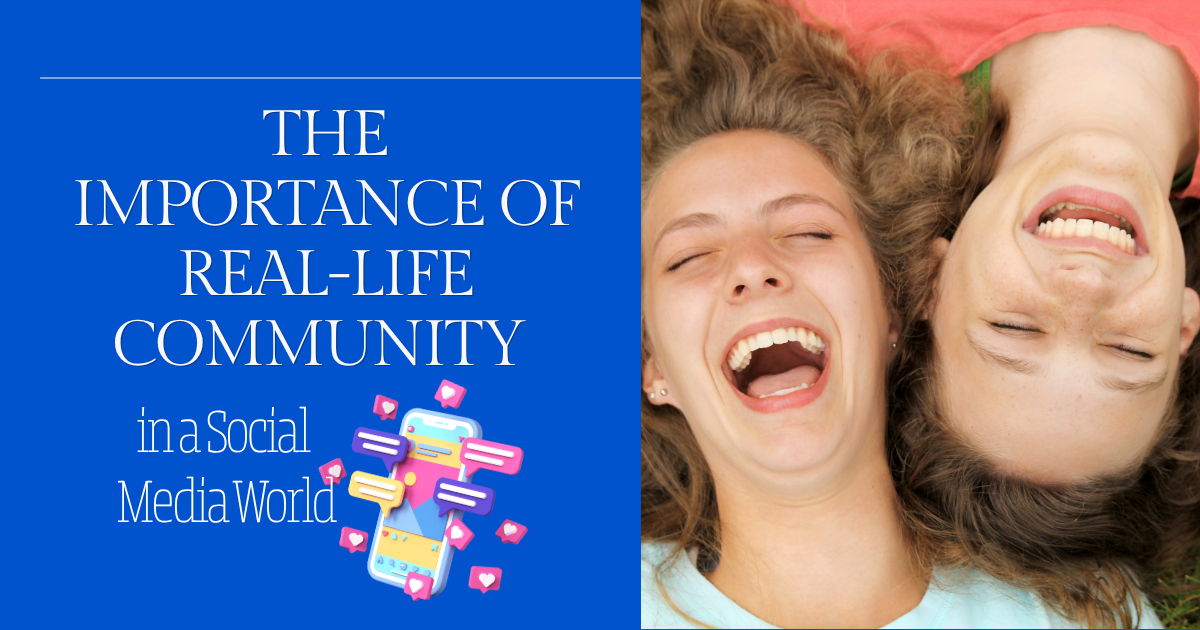
A great tragedy of our day is that many of us want to be loved, but we’re terrified of being known. ~ The Wolf in Their Pockets
Community matters. People we interact with—friends, neighbors, classmates, co-workers, random people on the street—influence us. Surroundings impact beliefs, thoughts, and opinions, as well as physical and mental health. All these factors contribute to behavior.
In short, adults and teens alike should choose friends wisely and engage with others who support healthy choices frequently.
Where do we find these friends?
Many teens think online friendships fulfill all their social needs. Maybe their only friends are people across the nation who play the same game every evening. Or perhaps they believe sending snaps through SnapChat every ten minutes is a fulfilling relationship. While these actions aren’t necessarily wrong in and of themselves, in-person community can’t be replaced.
Unfortunately, as a society, we have increasingly turned to social media for “connection.” But, as Chris Martin states in his book The Wolf in Their Pockets, “the social internet warps our understanding of friendship.” We’ve overlooked problems with this type of connection because social media has become an extension of who we think we are, and we believe everyone on our devices are “real” friends.
Three Ways Social Media Warps Friendship
Martin believes the social internet warps our understanding of friendship in these three ways (from the chapter “Build Friendship” in The Wolf in Their Pockets):
- The social internet makes friendship a commodity. Friends are a means to an end.
- We mistake clicks of affirmation for acts of love. A retweet or share isn’t the same as a shoulder to cry on.
- We believe a digital connection can supplant an embodied connection. We intentionally pursue online relationships rather than real-life relationships.
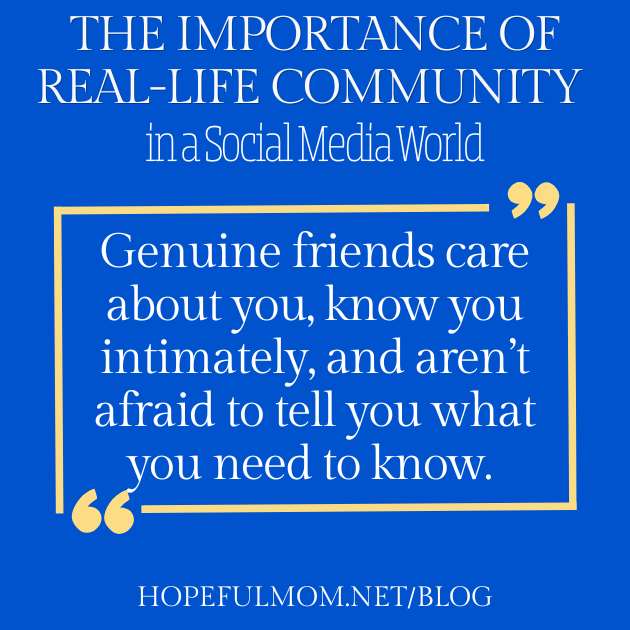
Genuine friends care about us, know us intimately, and aren’t afraid to tell us what we need to know. These types of friends are even more important as parents of children who have hurt us—and for children who struggle with unwanted behavior. Martin explains it this way: “We need friends who will wound us when we need to be wounded and bind our wounds when they need to be bound.” I love this description because it represents a deep, strong friendship, which tends to be rare and exceptional. Precious friendships like these develop over time and through shared experiences—in-person experiences.
Benefits of Community Living
But community living isn’t only found in friendships. Family. Workplace. Church. Sports teams. These are communities, too. Participating in non-profits, game nights, and other organizations. These activities take place inside of communities.
Finding our place, plugging in, and sharing with others requires determination. However, the benefits are worth the effort.
The article “Impact of Community on Mental Health (and How to Find Yours)” at Pathlight Mood & Anxiety Center states, “When we’re surrounded by people who accept us fully for who we are, we’re more likely to feel supported, loved and valued. That’s one of the reasons such a strong link exists between community and mental health.”
The same article lists these five benefits of a healthy community:
- Belonging – An accepting community allows a person to stay true to themselves as well as allowing for the person to receive as much as they give.
- Support – Within a thriving community, a person feels cared for and respected. During difficult times, they are reassured and offered hope.
- Purpose – The role within the community gives each person a sense of purpose.
- Safety – Within the right community, trust exists. Because a person can be themselves, mistakes turn into learning opportunities. They also build a stronger sense of self-worth.
- Recovery – During times of distress, those in a nonjudgmental community are more likely to seek care for their mental health.
My husband recently had a spot removed from his back. While the procedure was minor, the bandage needed changing twice a day for several weeks. Since he couldn’t reach the area, I was glad to take care of it for him. This simple task in no way makes up for the myriad ways he’s taken care of me over the years.
While tending to this chore one morning, I wondered what someone living alone would do in this situation. If I were single, would I have the courage to ask a neighbor or friend to help me with a physical challenge? This illustrates the importance of living in community. In so many ways—physically, emotionally, financially, and socially—my husband and I have been there for each other. But maybe I should step out of my comfort zone, get over my insecurities, and expand my circle of in-person friends and community.
Reflect on Your Communities
Do you have a place where you can be yourself? Where you’re encouraged and supported and receive valuable feedback? Can you express your parenting concerns or hurts without feeling judged? Maybe with a close friend or within a small group setting?
How about your children? Do they have an in-person community where they are comfortable? Can you help them understand why in-person connections are important?
Do you and your children feel comfortable joining new groups? Developing community relationships and modeling healthy community living helps teens understand the importance of surrounding themselves with those who fully know them, accept them, and love them enough to tell them when they are making unhealthy choices.
I hope you find some comfort here at Hopeful Mom. If you’re new here, please subscribe for two FREE PDF downloads and emails when new posts are available. Also check out the About page and all the resources available.
About the author

Barb Winters is the author of Sexpectations: Helping the Next Generation Navigate Healthy Relationships and founder of Hopeful Mom. She’s a certified mental health coach and offers one-on-one consultations for parents. For more about Barb, click "About" in the menu.