

My child saw pornography. What should I do?
My child throws a fit when I ask him to turn his game off. What can I do?
My child keeps breaking our screen time rules. What steps can I take?
When parents ask these types of questions, they’re not typically pondering parenting styles. They desire a speedy solution. They want a formula—a statement or action—that will force their child to stop their current behavior immediately.
I understand. We should divert a child from destructive behavior as fast as possible. However, a quick fix is usually temporary. The pull of pornography, gaming, social media, vaping, fill-in-the-blank, will win unless we take a long-term approach. They’ll likely gravitate back to unwanted behavior unless we examine the heart of the problem.
And sometimes the heart of the problem includes a parenting issue. Yes, our preteens and teens chose these unhealthy behaviors. (This is less true for younger children.) And, no, it’s not necessarily the parents’ fault. However, permanent solutions involve a checklist of actions. And one of those is assessing our part and which of the four parenting styles we lean toward.
Most of us realize that there are different ways to parent children. But have we consciously considered how we parent, or have we fallen into a rhythm based on our schedule, mood, or what’s easiest? It’s never too late to analyze how we parent and adjust so our children get the best parent available to them.
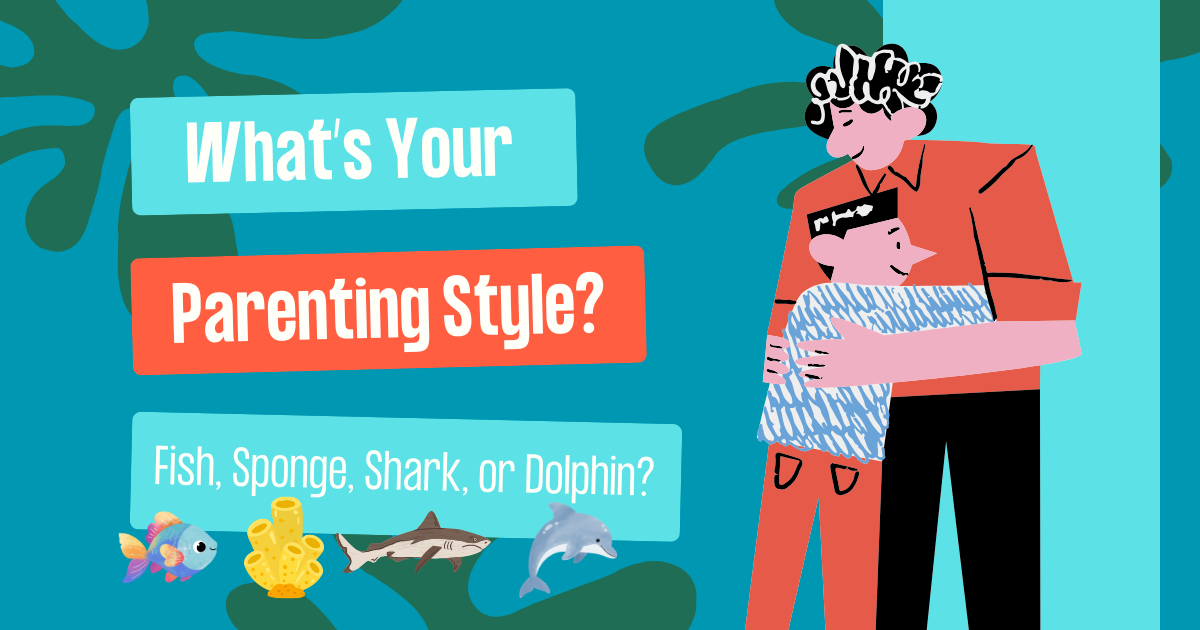
Discover the 4 parenting styles and why 'dolphin parenting' (authoritative) helps kids build healthy habits around tech, boundaries and more. What's Your Parenting Style? Fish, Sponge, Shark, or Dolphin? #parentingstyles Share on XFour Parenting Styles
I was recently reminded of the four parenting styles model while reading 10 Rules for Raising Kids in a High-Tech World by Jean Twenge, PhD. She cited newer parenting styles like helicopter, snowplowing, gentle, and lighthouse. Then she turned back to the terms academics use and attached an animal to each. This helps us understand and remember them.
Uninvolved Parenting/Neglectful Parenting (fish)
Fish provide basic needs with little to no nurturing or expectations. Then they leave their offspring to fend for themselves. This type of parent doesn’t show much affection or set boundaries. While a child may feel independent, without rules or boundaries or a concerned parent, the child will likely make unhealthy choices.
Permissive Parenting (sea sponge)
Sea sponges are soft and nurturing but have no backbone. This type of parent shows lots of love but doesn’t set boundaries or hand out consequences. E3 Family Solutions, Inc. calls this “friendship parenting.” This parent doesn’t want their children to be upset with them, so they treat them more like friends than children who need structure. These children may be spoiled or irresponsible, and they will falter as adults.
Authoritarian Parenting (tiger shark)
This is the “because I said so” parent. The rules are rigid and the punishments are harsh. These parents show little affection. As adults, children raised in this type of household may be resentful or rebellious. Since the child isn’t taught how to set boundaries on their own, they may never leave (failure to launch) or they may be controlled easily by others.
Authoritative (dolphin)
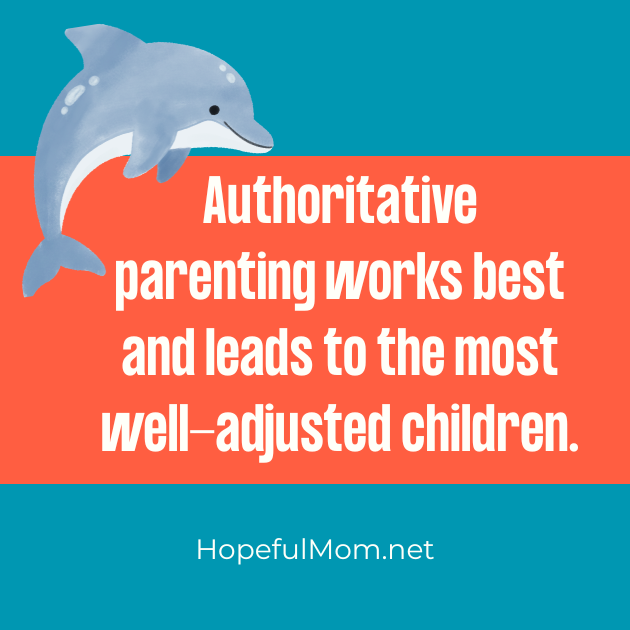
This parent is both firm and flexible, showing affection and setting boundaries. This parent explains why rules are necessary and solves problems together with the child. Open communication and natural consequences are part of this household. This type of parenting works best and leads to the most well-adjusted children.
Did you see yourself in any of these descriptions? I admit, as a young parent, I leaned toward authoritarian parenting (tiger shark). When displaying this type of parenting, I talked at my children, expected them to obey without explanation, and dismissed their thoughts. I saw them as argumentative if they talked back. During these actions and attitudes, they did not feel valued.
Maybe you can relate to my description of tiger shark parenting. Or maybe you lean toward permissive (sea sponge) or uninvolved (fish). Or maybe you skip around and would be considered an inconsistent parent. Wherever you see yourself, it’s okay. The objective is to identify where we are, apologize for our mishaps, and cultivate healthier interactions, leaning toward authoritative (dolphin) parenting.
Authoritative parents (NOTE the DOLPHIN acronym):
D — Deliver on their word.
Authoritative parents are consistent and reliable.
O — Open the door to feelings and honest conversations
They validate their child’s feelings and allow them to share their thoughts.
L — Limit and hold the line on boundaries
They set boundaries and stick to them.
P — Provide guidance and direction
They offer guidance to their child.
H — Handle change with flexibility
They are flexible when needed.
I — Invest in the relationship
They nurture a relationship with their child.
N — Navigate natural consequences and follow throughThey allow for natural consequences and follow through with them.
Let’s face it. Parenting is hard, especially when children make unhealthy choices like watching pornography. It requires humility, resiliency, and adaptation.
Do you see an area you need to adjust? Confess to your child that you don’t always know the best way to handle parenting issues. Admit you’ve failed at times and tell them you want to improve. Most children respect parents who acknowledge that they aren’t perfect.
We have hope. Each of us can learn as we mature and adapt based on new information and different circumstances. You’ve got this!
Subscribe below for a free gift!
About the author

Barb Winters is the author of Sexpectations: Helping the Next Generation Navigate Healthy Relationships and founder of Hopeful Mom. She’s a certified mental health coach and offers one-on-one consultations for parents. For more about Barb, click "About" in the menu.